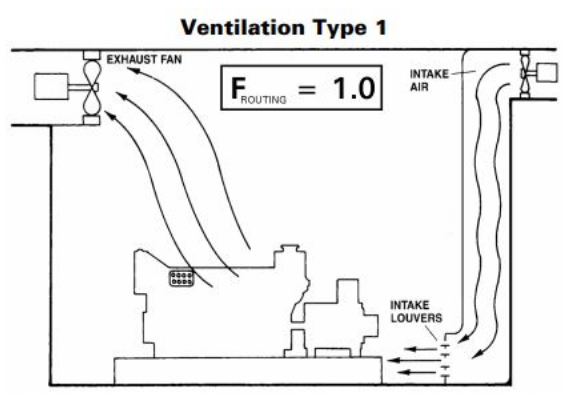
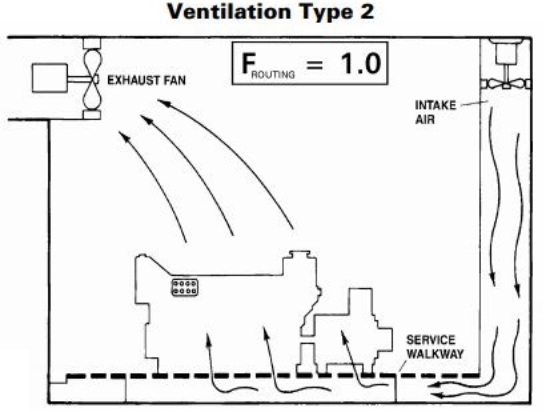
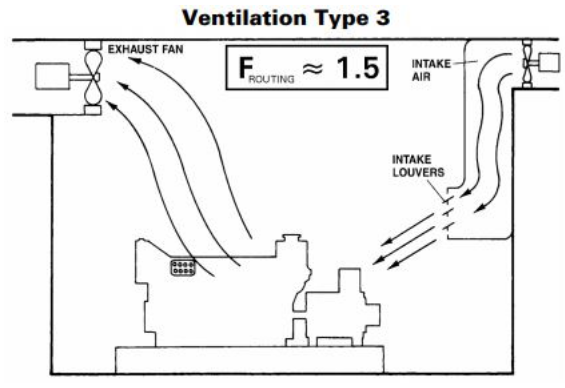
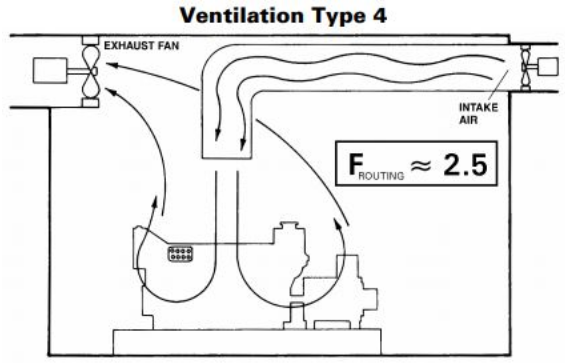
Detailed Calculation Methodology & Thermodynamic Links
This calculator utilizes the standard **Industrial Engine Room Ventilation Formula** derived from Caterpillar/NFPA 20 engineering standards.
V =
H
D × Cp × Δt
+ Combustion Air
How the Parameters are Related
The **Brake Power Output** and **Mechanical Efficiency** are used to determine the total energy profile of the engine. When fuel burns, only a portion is converted to mechanical power; the rest is rejected as heat through the exhaust, coolant, and **Radiated Heat (H)**.
- Engine Fuel Energy Input: Calculated as
Brake Power / Efficiency. This represents the 100% energy baseline.
- Radiated Heat (H): This is the portion of the fuel energy (typically 7-10%) that escapes the engine block into the room air. This is the **Primary Driver** for sizing the fan.
- Combustion Air: This is the oxygen required for the cylinders. If unknown, it is often estimated at
0.1 m³/min per kW of Brake Power.
Must vs. Optional Parameters
- Radiated Heat (H), Combustion Air, and Ambient Temperature: These are the "Must" parameters required to solve the core ventilation equation.
- Brake Power and Efficiency: These are "Optional" metadata parameters. They are used by the engine library to estimate heat rejection when manufacturer-specific data is unavailable.
Why Fire Pump Room Temperature Matters
Source: 91firepump.com
A fire pump is the heart of a fire protection system. It ensures that water is delivered at the correct pressure and flow rate to sprinklers and hydrants when a fire occurs. However, even a well-designed system can fail if the pump room temperature is not maintained properly.
Why temperature control is critical:
- Prevents Equipment Freezing: In cold climates, temperatures below freezing can damage pump casings, pipes, and valves.
- Avoids Overheating and Equipment Stress: Excessive heat can shorten the lifespan of electric motors, diesel engines, and control panels.
- Ensures Automatic Start-up: Fire pumps must be ready to start instantly during an emergency.
- Maintains Code Compliance: Building codes and NFPA 20 require specific environmental conditions to ensure system reliability.
NFPA 20 Fire Pump Room Temperature Standard
The NFPA 20 Standard provides detailed requirements for environmental control in the fire pump room.
1. Minimum Temperature Requirements
According to NFPA 20, the fire pump room should be maintained at a minimum temperature of 40°F (4°C) at all times to prevent freezing conditions.
2. Maximum Temperature Considerations
- Electric motors typically operate best below 104°F (40°C).
- Diesel engines should be kept below 120°F (49°C) for reliable performance.
Excessive heat can trigger safety shutdowns in diesel engines or degrade electrical insulation in motors, leading to performance issues or failure.
Fire Pump Room Ventilation Requirements
Ventilation is vital for maintaining the ideal temperature and preventing equipment overheating. NFPA 20 specifies that adequate ventilation must be provided for both electric motor and diesel engine fire pumps.
For Electric Fire Pumps: Provide enough air circulation to keep motor and controller components within safe operating temperature.
For Diesel Engine Fire Pumps: Diesel engines generate heat and exhaust gases during operation. NFPA 20 requires separate intake and exhaust openings, with sufficient cross-sectional area to ensure proper airflow. The exhaust pipe must be heat-insulated and routed outside the building safely.
References: NFPA 20; practicalhvac.com; 91firepump.com; Graphic Schematics: cat.com/power-systems.